- Home
- Learn Linux
- Learn Electronics
- Raspberry Pi
- Programming
- Projects
- LPI certification
- News & Reviews

Google Ads
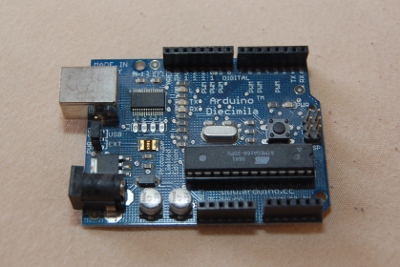
Arduino is actually the name of one particular manufacturer and their boards which are based around microcontrollers. These are small computers, but not computers that you can connect up to a mouse and keyboard, these have much less functionality and will run your own code directly on the processor.
They can be used when you want an electronic circuit that needs to make a decision and gives it much more flexibility compared to fixed function electronic components.
The Arduino and Raspberry Pi are very different devices. There are somethings that the Arduino does well and some that the Raspberry Pi does well. There is also an area of overlap where either could do the same job. So which is best? The video below attempts to answer that.
I've created the attached video which shows how to get started with the Arduino.
The circuit diagram and Arduino code is included below:

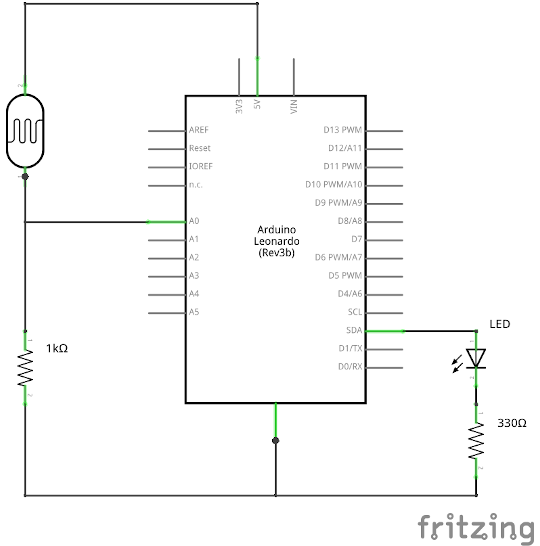
int analogPin = A0;

int digitalPin = 2;


void setup() {

  pinMode (digitalPin, OUTPUT);

}


void loop() {

  int analogValue;


  analogValue = analogRead(analogPin);


  if (analogValue < 200) {

    digitalWrite(digitalPin, HIGH);

  }

  else {

    digitalWrite(digitalPin, LOW);

  }


  delay (1000);


}
In the video on Shift Registers I have shown a LED 7-Segment counter. Unlike the other videos in this series this one actual shows a working digital circuit creating a numeric display which can connect to the Raspberry Pi and the Arduino. This project is complete with circuit diagrams for the Raspberry Pi and Arduino along with the source code.
In an earlier video I explained how both the Arduino and Raspberry Pi have their pros and cons. But what if you could have the best of both? Well you can using a Raspberry Pi and Arduino together in a single project.
In this video I explain about the advantages of each and how you can play to the strengths of each of the platforms. I then show how you can create simple code using C++ on the Arduino and Python on the Raspberry Pi to communicate using a simple text based messaging protocol.
This video shows that when you combine a Raspberry Pi with an Arduino then two are indeed better than one.
Now available second edition of my book "Learn Electronics with Raspberry Pi" now adds a section on Digital Electronics which compliments this page this with more details about driving digital electronic circuits using a Raspberry Pi.
To be notified about future videos
Subscribe to the PenguinTutor YouTube Channel
Please view the copyright information regarding use of the circuits.


